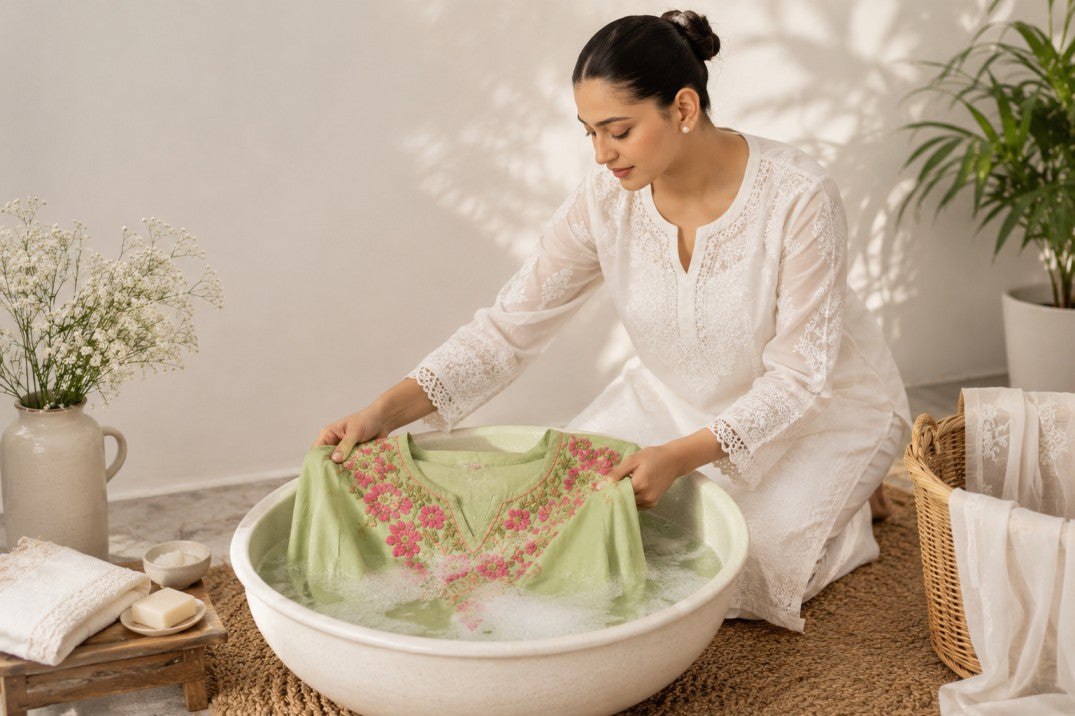
How to Care for Chikankari Kurtis and Kurta Sets
A Chikankari kurta can be easy to wear but slightly less forgiving when it comes to care.
The embroidery needs gentle handling, and the fabric can also react differently depending on what the garment is made from. Cotton, mulmul, rayon, georgette and other fabrics may need different treatment, so the first rule is simple: follow the garment's own care instructions whenever they are provided. Current Chikankari care guides consistently recommend gentle washing, avoiding harsh detergents and preventing unnecessary stress on the embroidery.
Here is a practical guide on how to care for Chikankari without making the process complicated.
Why Chikankari Needs Gentle Care
Embroidery adds another layer of work to a garment.
Rough washing, twisting, strong detergents or direct heat can put unnecessary pressure on the stitches and fabric. This is especially important for hand-embroidered pieces.
The good news is that Chikankari does not need an elaborate routine. Most of the difference comes from avoiding a few common mistakes.
1. Read the Care Label First
Before washing any Chikankari garment, check the care label or product instructions.
This matters because not every Chikankari garment is made from the same fabric, and not every embroidered piece should be washed in exactly the same way.
Some garments may be suitable for gentle hand washing, while more delicate or heavily worked pieces may require dry cleaning. Current Chikankari care guides also recommend paying attention to fabric and embroidery density before deciding on a cleaning method.
Do not ignore the product-specific instructions just because another Chikankari kurta was washable at home.
2. How to Wash a Chikankari Kurti
When home washing is permitted, gentle hand washing is usually the safer approach.
Use cool or normal water and a mild detergent. Put the garment into the water gently rather than aggressively rubbing it.
Avoid scrubbing directly over the embroidery.
You can gently move the garment through the water, focusing more on cleaning the fabric than working the embroidered areas. Chikankaar and Fabindia both recommend gentle washing and avoiding harsh detergents for Chikankari clothing.
3. Do Not Soak It for Too Long
A long soak may seem harmless, but there is usually no reason to leave a delicate embroidered garment sitting in water for an extended period.
Once the garment has been cleaned, rinse it gently and move on to drying.
The longer a garment stays wet, the more opportunity there is for colour, fabric and embroidery to be affected, particularly when the wrong washing method is being used.
4. Never Twist or Wring the Garment
This is one of the easiest mistakes to make.
After washing, do not twist the kurta tightly to remove water.
Wringing can place unnecessary stress on both the fabric and the embroidered stitches. Current care guidance specifically recommends avoiding twisting or wringing.
Instead, press the garment gently to remove excess water.
The less mechanical stress you put on the embroidery, the better.
5. Dry Chikankari in the Shade
Direct, harsh sunlight is not the best option for delicate embroidered garments.
After washing, dry your Chikankari in a shaded, well-ventilated area. This can help reduce unnecessary exposure to heat and strong sunlight.
Make sure the garment is spread or supported properly so that the wet fabric does not become unnecessarily stretched.
Do not leave a damp Chikankari piece in a closed room or pile it with other wet clothes.
6. Do Not Iron Directly Over the Embroidery
Ironing is where many people unintentionally damage delicate embroidery. Turn the garment inside out and use a suitable temperature for the fabric.
Avoid pressing a hot iron directly onto raised embroidery. Chikankaar recommends ironing inside out and using a cloth over embroidery when required.
If your garment is particularly delicate, follow its own care instructions instead of using a general heat setting.
7. How to Store Chikankari Kurtis
Clean clothes should always be completely dry before being stored.
Fold your Chikankari garments neatly and keep them in a clean, dry wardrobe.
Cotton or breathable storage covers can be preferable to keeping delicate embroidered garments tightly sealed in plastic for long periods. Chikankaar's current storage guidance also recommends breathable storage and avoiding moisture-trapping plastic.
Do not overcrowd your wardrobe.
Giving clothes enough space helps prevent unnecessary creasing and allows better air circulation.
8. Give White Chikankari Extra Attention
White Chikankari is beautiful, but stains and marks are also easier to notice. Do not immediately reach for bleach.
Strong whitening products and stain removers can be harsh on fabric and embroidery. Current Chikankari care advice commonly recommends avoiding bleach and strong cleaning chemicals.
For a mark, use the least aggressive cleaning method allowed by the garment's care instructions.
For expensive or delicate pieces, professional cleaning may be the safer option.
You can browse the Chikankari white kurti collection while keeping in mind that individual product care instructions should always be checked before washing.
9. Be More Careful During Monsoon
Monsoon care deserves separate attention because drying becomes more difficult.
A damp embroidered garment left inside a closed wardrobe can develop an unpleasant smell and may be more vulnerable to moisture-related problems. A recent 2026 Chikankari monsoon guide also highlights trapped moisture, slow drying and poor ventilation as common concerns during the rainy season.
During humid weather:
Make sure the garment is completely dry before folding.
Avoid keeping damp clothes in closed wardrobes.
Allow air to circulate around stored garments.
Do not pack recently washed pieces away just because they feel dry on the surface.
10. How to Remove a Small Stain
Do not panic and start rubbing.
Instead, check the care instructions and deal with the stain as gently as possible. Aggressive rubbing can disturb embroidery, especially when the thread is raised.
For delicate, heavily embroidered or expensive garments, professional cleaning is usually a better choice than experimenting with home remedies.
11. Machine Washing: Is It Safe?
There is no one answer for every Chikankari garment.
If the care label allows machine washing, use the gentlest suitable cycle and protect the garment as recommended.
However, current Chikankari-specific guides generally prefer hand washing for hand-embroidered pieces and advise extra caution with machine washing.
When in doubt, check the product instructions instead of assuming that every cotton Chikankari kurta can go into the machine.
12. Different Fabrics Need Different Care
A cotton Chikankari kurta may be easier to maintain than a more delicate fabric, but you should not apply the same treatment blindly to every garment.
For example:
Cotton and mulmul: Often suitable for gentle care when the product instructions permit. Rayon: Can need extra care with soaking and handling.
Georgette and delicate fabrics: May be better suited to professional cleaning depending on the garment.
The embroidery does not exist separately from the fabric. Both need to be considered together.
Common Chikankari Care Mistakes
The most common mistakes are surprisingly basic:
Scrubbing the embroidery.
Using strong detergent.
Leaving the garment soaked for too long.
Wringing it tightly.
Drying it in harsh sunlight.
Ironing directly over the embroidery.
Storing it before it is completely dry.
Avoiding these mistakes can go a long way towards preserving the garment.
How Often Should Chikankari Be Washed?
You do not need to wash a Chikankari kurta after every short wear.
Wash it when it actually needs cleaning, taking into account sweat, stains, weather and how long it was worn.
For garments used lightly, reducing unnecessary washing can also reduce repeated stress on the embroidery.
Final Thoughts
Knowing how to care for Chikankari is mostly about being gentle.
Use the care label as your starting point, wash carefully when home washing is allowed, avoid twisting and harsh chemicals, dry properly and store the garment only when it is completely dry.
A little care is much easier than trying to repair embroidery after it has already been damaged.
FAQs
How should I wash a Chikankari kurti?
When the care label allows home washing, gently hand wash it with cool or normal water and mild detergent. Avoid scrubbing or wringing the embroidery.
Can I wash Chikankari in a washing machine?
Only when the garment's care instructions allow it. Hand washing is generally the safer approach for delicate hand-embroidered pieces.
Can I use bleach on white Chikankari?
It is better to avoid bleach unless the garment's care instructions specifically allow it. Strong chemicals can affect the fabric and embroidery.
Should I dry Chikankari in direct sunlight?
Shade drying is generally preferable for delicate embroidered garments.
How should I store Chikankari clothes?
Store them only after they are completely dry, in a clean, dry and well-ventilated space. Breathable storage covers can be useful for long-term storage.