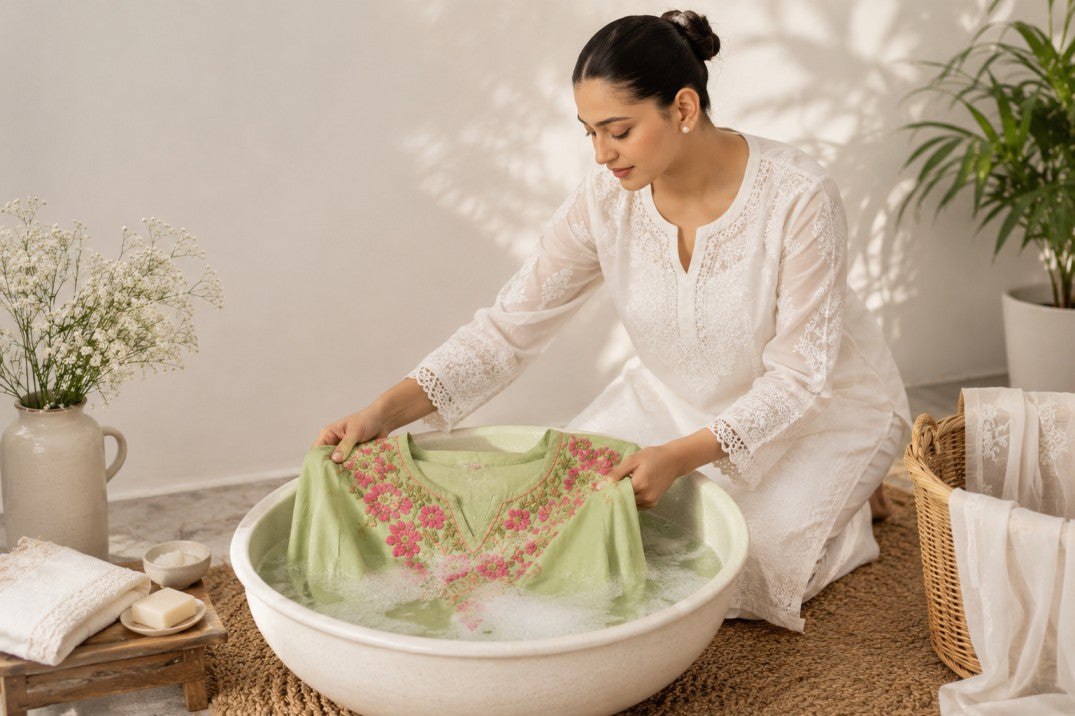
Chikankari vs Kashmiri Aari: What’s the Difference?
Chikankari and Kashmiri Aari can both give an ethnic outfit a handcrafted look, but they are not the same embroidery technique.
The easiest way to understand the Chikankari vs Kashmiri Aari difference is to look at the way the embroidery is made and the kind of visual effect it creates.
Chikankari uses a variety of traditional stitches, while Aari is known for chain-stitch embroidery created with a hooked needle. Current embroidery guides also make this distinction clearly when comparing the two techniques.
What Is Chikankari?
Chikankari is a traditional embroidery style strongly associated with Lucknow.
It is not defined by one single stitch. Different traditional stitches can be combined to create floral motifs, borders, textured areas and open-work effects.
That is one reason Chikankari can look very different from one garment to another.
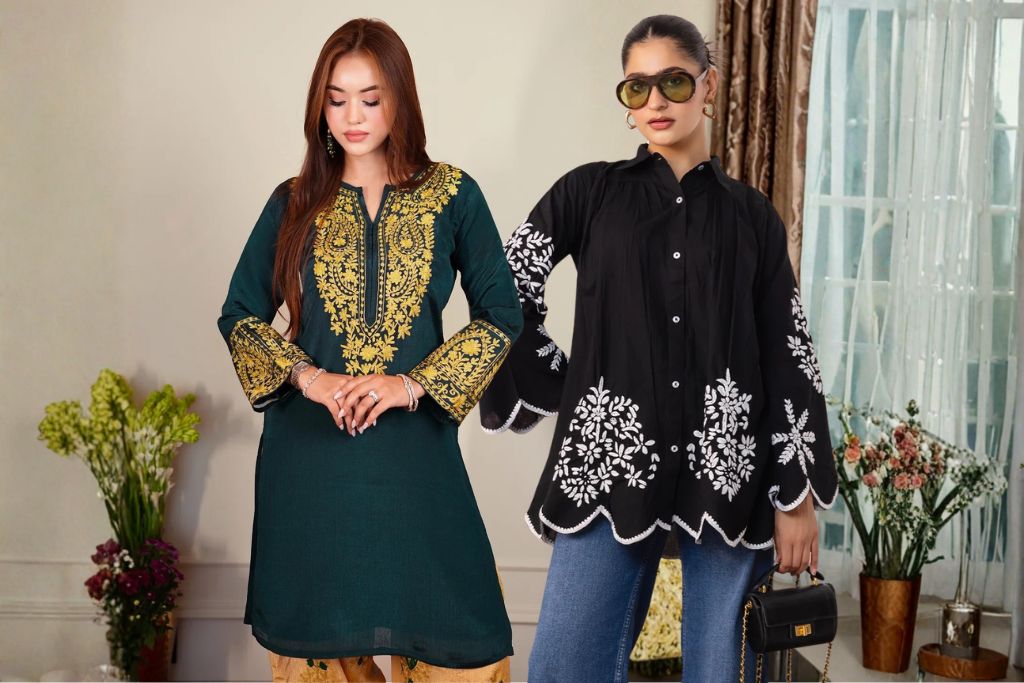
A light cotton kurta with subtle embroidery can feel very different from a heavily worked festive kurta, even though both use Chikankari.
You can explore the Chikankari collection to see how the craft works across different silhouettes.
What Is Kashmiri Aari?
Aari embroidery uses a hooked needle, commonly called an Aari needle, to create chain stitches.
The technique allows the embroiderer to create flowing lines and continuous patterns across the fabric. Current 2026 guides describe Aari specifically as hooked-needle chain-stitch embroidery and note that it can create dense, flowing surface patterns.
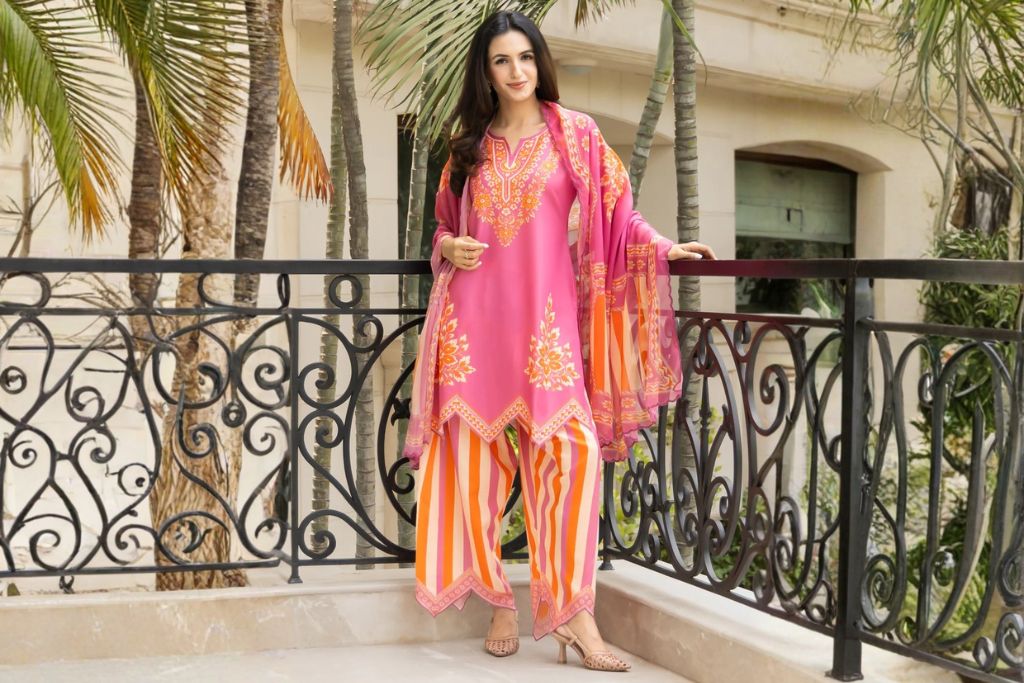
Kashmiri Aari is widely seen in floral and paisley-inspired designs and can be used on garments as well as other textiles.
At House of Kari, you can see this technique in pieces such as Kashmiri Aari work cotton kurta sets.
Chikankari and Aari Work Difference
The main difference is the embroidery technique itself.
Chikankari is a broader embroidery tradition that uses multiple stitch types. Aari is recognised by its hooked-needle chain stitch.
That technical difference affects how the embroidery looks on the finished garment.
| Feature | Chikankari | Kashmiri Aari |
|---|---|---|
| Main association | Lucknow | Kashmir |
| Main tool | Embroidery needle | Hooked Aari needle |
| Stitch vocabulary | Multiple traditional stitches | Chain stitch |
| Visual character | Fine, delicate and varied | Flowing, defined and textured |
| Common motifs | Floral, vines, jaali and other traditional motifs | Floral and paisley-style patterns |
| Styling | Everyday to festive | Everyday, festive and statement looks |
The table is a simple guide; individual garments can vary considerably depending on fabric, embroidery density and design.
Chikankari Embroidery vs Aari Work: How They Look
Chikankari often has a lighter visual quality.
The embroidery can sit softly against the fabric, especially when the garment uses delicate motifs or tonal thread.
Aari often creates more visible chain-stitch lines and can look more pronounced depending on how densely it is worked.
This is why two embroidered kurtas can feel very different even when both are floral. One may look soft and understated.
The other may look stronger and more textured. Neither look is automatically better.
Which One Is More Delicate?
That depends on the actual garment.
It is tempting to say that Chikankari is always more delicate and Aari is always heavier, but that would be too simplistic.
A lightly worked Aari kurta can look subtle, while a heavily embroidered Chikankari piece can be quite rich.
Instead of judging the craft only by its name, look at the embroidery density and the fabric used in the specific garment.
Which One Is Better for Everyday Wear?
For everyday dressing, the best choice usually depends more on the garment than the embroidery name.
A lightweight Chikankari cotton kurta can be easy to style with pants or denim.
A lighter Aari kurta can also work for daily wear when the embroidery and silhouette are not overly elaborate.
For a classic everyday direction, you can explore Chikankari cotton long kurtas.
Which One Works Better for Festive Dressing?
Both can work.
Chikankari can create an elegant and understated festive look, especially when paired with jewellery and a dupatta.
Aari can be a good choice when you want the embroidery itself to be more visible.
The choice can also depend on colour, embroidery density and the overall styling of the garment.
For example, a simple Chikankari kurta with statement earrings can look festive without being heavily embroidered.
An Aari kurta with defined floral work can create a stronger statement with fewer accessories.
How to Style Chikankari
Chikankari is easy to dress in different directions.
For a simple look, pair a Chikankari kurta with straight pants and flats.
For an Indo-Western look, a shorter silhouette can be paired with denim or contemporary footwear.
For festive dressing, add earrings, a dupatta and more formal footwear. The same craft can therefore work across very different occasions.
How to Style Kashmiri Aari
Aari embroidery can already add plenty of visual detail, so styling does not always need to be complicated.
Pair an Aari kurta with straight pants and simple jewellery for daytime wear. For festive occasions, add statement earrings or a coordinated dupatta.
For a more traditional wardrobe, you can also look at HOK's existing guide How Is Kashmiri Kurti Different From Others?.
Are Chikankari and Kashmiri Aari the Same Type of Embroidery?
No.
They are different embroidery traditions and techniques.
Chikankari uses multiple traditional stitches, while Aari is based on chain stitch made using a hooked needle.
That does not mean the two cannot appear in similar silhouettes. Both can be used on kurtas, kurta sets and other ethnic garments.
The difference lies in the embroidery method and visual character.
Which Embroidery Should You Choose?
Ask yourself what you want from the outfit. Choose Chikankari when you prefer:
A softer embroidered appearance. Fine and varied stitch detailing.
Versatile ethnic pieces.
Easy everyday-to-festive styling. Choose Aari when you prefer: More visible chain-stitch detailing.
Flowing floral or paisley-style patterns. A stronger embroidered effect.
A more defined statement look.
You do not have to choose one permanently. A practical ethnic wardrobe can easily include both.
Final Thoughts
The Chikankari vs Kashmiri Aari debate is not really about which craft is superior. They simply offer different embroidery techniques and different visual results.
Chikankari gives you the flexibility of varied traditional stitches and a softer embroidered character.
Kashmiri Aari is recognised by its hooked-needle chain stitch and flowing surface patterns.
Once you understand the difference, shopping becomes easier because you can choose based on the style you actually like rather than simply picking the word that sounds more premium.
FAQs
Is Chikankari the same as Kashmiri Aari?
No. They are different embroidery techniques. Chikankari uses multiple traditional stitches, while Aari is known for hooked-needle chain stitch.
Which is more delicate, Chikankari or Aari?
Neither is automatically more delicate. The actual appearance depends on the fabric, stitch type and embroidery density of the garment.
What is Kashmiri Aari work?
It is a chain-stitch embroidery technique made using a hooked needle called an Aari.
Can both Chikankari and Aari be worn casually?
Yes. Both can be found in lighter, everyday silhouettes as well as more elaborate festive garments.
Which one is better for festive wear?
Both can work. Chikankari can give a softer look, while Aari can create a more visible embroidered effect.