How to Choose the Right Kurta Set: Fabric, Fit, Colour and Occasion Guide
Buying a kurta set online can look simple until you actually start choosing one.
You find a design you like, then notice that the same style is available in cotton, rayon, silk or other fabrics. Then come the questions about fit, colour, kurta length and whether the outfit will work for a particular occasion.
A set that looks perfect for a wedding may feel too dressy for office. The same way, a very lightweight everyday set may not feel special enough for a festive function.
So, how to choose a kurta set without getting lost in hundreds of options?
Start with four things: fabric, fit, colour and occasion. These four usually tell you much more than the product photo alone.
- Start With the Occasion
Before thinking about colour or embroidery, decide where you are going to wear the kurta set. This immediately removes many options that may not be right for you.
For Daily Wear
Look for comfortable fabrics, easy silhouettes and minimal detailing.
A simple cotton or lightweight set can work well for regular errands, casual lunches and everyday dressing.
For Office Wear
A straight-cut kurta set in a subtle colour usually feels more appropriate than something heavily embellished.
Look for clean lines, comfortable trousers and detailing that is visible without making the outfit look too festive.
For Festive Functions
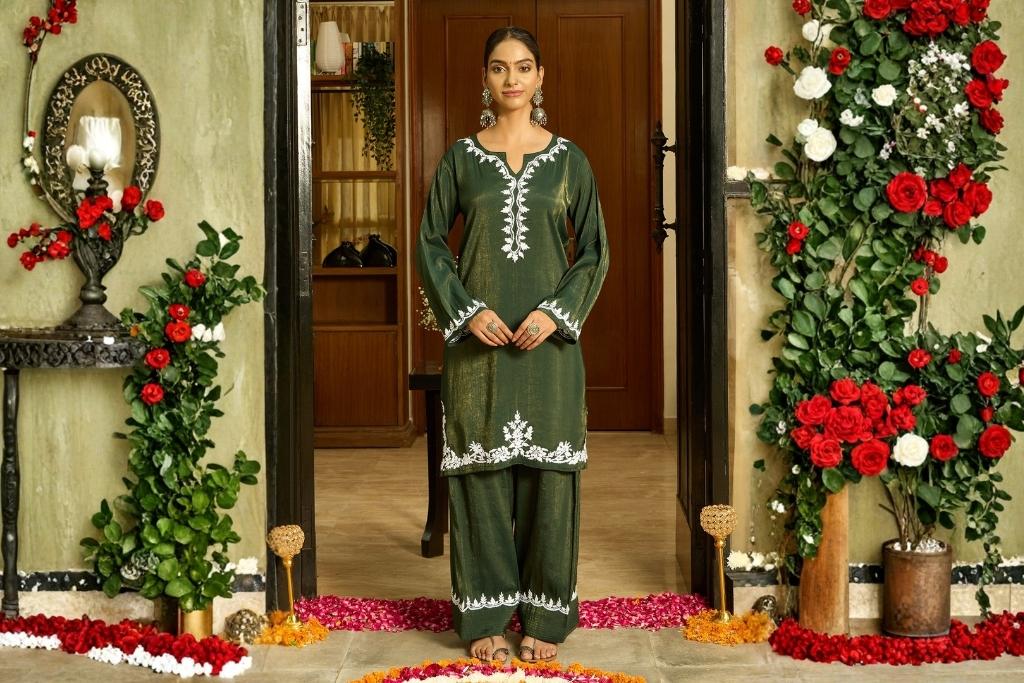
This is where you can bring in richer colours, embroidery, a dupatta or slightly dressier fabrics.
You do not necessarily need heavy work. A well-designed kurta set with the right accessories can be enough.
For Weddings
Wedding dressing gives you more room to experiment with colour, fabric and embroidery.
A more detailed kurta set can work for mehendi, family functions or even some wedding ceremonies, depending on the dress code.
Current kurta-set buying guides similarly recommend choosing the level of detailing and fabric according to the occasion rather than treating one style as suitable for every event.
- Choose the Fabric According to When You Will Wear It
Fabric affects how the outfit feels on your body, how it falls and whether you will actually enjoy wearing it for a few hours.
There is no single best kurta set for women because the right fabric depends on the weather and occasion.
Cotton
Cotton is a practical option for everyday wear, particularly in warmer weather. It is easy to style and works naturally for casual and office wardrobes.
For a cotton-focused ethnic wardrobe, you can explore Chikankari cotton kurta sets.
Mulmul
Mulmul has a lighter, softer feel and can work well when you want an easy summer outfit. It is particularly useful for relaxed daytime dressing.
Linen
Linen has a more textured appearance and works well when you want something simple but slightly more structured.
It can be a good option for smart casual and office styling.
Rayon
Rayon tends to have a softer drape and can be useful when you want a more fluid silhouette.
Always check the specific garment details because the feel and construction can vary from one product to another.
Chanderi
Chanderi can give an outfit a more dressy appearance and is often considered for festive or occasion dressing.
Silk or Silk-Blend Fabrics
These are more suited to occasions where you want the outfit to feel richer.
They can work particularly well for festive evenings and weddings, depending on the design and amount of embellishment.
Current 2026 guides similarly separate lighter cotton and mulmul options from more occasion-oriented fabrics such as Chanderi, georgette and silk.
- Think About Fit Before the Size Label
A size number is useful, but it does not tell you everything about how a kurta set will actually fit.
Two sets marked "M" can feel completely different because their cuts, measurements and fabrics are different.
The better approach is to check the actual garment measurements. Look at:
Shoulder: The shoulder seam should sit where your natural shoulder ends.
Bust: Make sure there is enough room for comfortable movement and sitting.
Sleeves: You should be able to move your arms naturally without the sleeve feeling restrictive.
Hip area: This is particularly important with straight kurtas.
Waist of the bottom: Check whether the waistband is elasticated, fitted or adjustable.
Kurta length: Check the actual length rather than judging it from the model's height.
Current 2026 sizing guides also emphasise measurements, ease and garment proportions instead of relying only on S, M, L or XL labels.
- Do Not Buy a Smaller Size Just for a Tighter Look
This is one of the most common mistakes when buying ethnic wear.
A kurta should generally allow you to sit, walk and move without pulling across the body.
Buying a smaller size because you think it will look more fitted can have the opposite effect. If the fabric starts pulling around the bust, shoulders or hips, the overall silhouette can look less polished.
Your ideal fit depends on the design.
A straight kurta may need a little more ease. A fitted style may have a closer cut.
An A-line silhouette is designed to fall away from the body. The product measurements should guide your decision.
- Choose the Silhouette Before the Print
The print or embroidery may catch your eye first, but the silhouette is what determines how the outfit actually looks when worn.
Straight Kurta Set
A straight cut is a classic choice.
It works well for office wear, casual dressing and many festive occasions because the shape is easy to style.
A-Line Kurta Set
An A-line kurta gradually opens towards the hem and creates more movement.
It can be useful when you prefer a little more room around the lower half.
Anarkali Kurta Set
An Anarkali has a much fuller flare and naturally feels more occasion-oriented.
It can work well for weddings, festive celebrations and other dressier events. Current 2026 buying guides also position Anarkali sets more towards occasion wear than everyday dressing. (rainandrainbow.com)
Short Kurta Set
Shorter silhouettes give you more flexibility for Indo-Western styling.
You can pair them with jeans, wide-leg trousers or contemporary bottoms.
- Choose the Kurta Length According to Your Styling Preference
Length can completely change the character of a kurta set. A longer kurta can feel more traditional.
A medium-length straight kurta can look polished and versatile. A short kurta can feel more relaxed and modern.
Think about what you already have in your wardrobe.
If most of your bottoms are jeans or wider trousers, a shorter kurta may give you more combinations.
If you usually wear ethnic bottoms, a longer kurta may fit more naturally into your wardrobe.
- Choose Colours Based on Where You Will Wear the Set
Colour does not have to be complicated.
Instead of asking which colour is "best", ask which colour makes sense for the occasion.
Everyday Colours
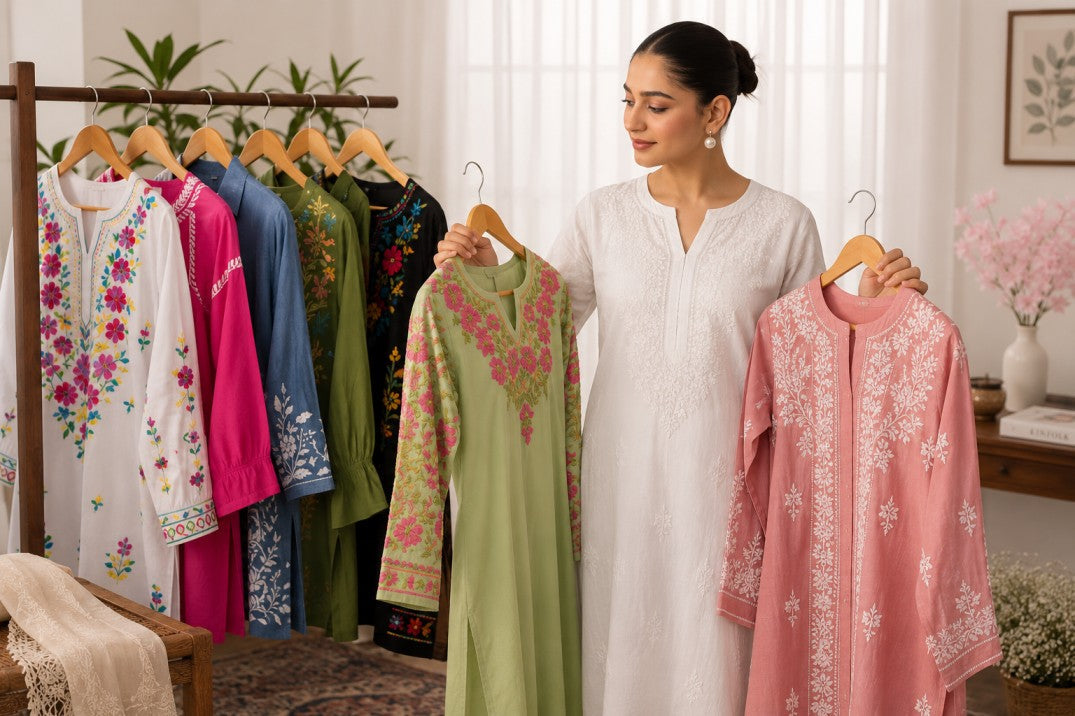
White, beige, blue, soft pink, grey and muted greens can be easy to repeat.
Office Colours
Neutral, earthy and muted shades generally give a cleaner professional appearance.
Festive Colours
Mustard, yellow, pink, red, green, wine and other richer colours can create a stronger festive mood.
Evening Colours
Deeper tones can work particularly well for evening functions when paired with suitable jewellery and footwear.
House of Kari's current collection also includes a wide range of colours across Chikankari kurta sets, including white, pink, beige, mustard, red, blue and lavender.
- Match the Colour to Your Existing Wardrobe
This is something people often forget.
A beautiful kurta set is not very useful if you have nothing else that works with it. Before buying, look at the footwear, jewellery, dupattas and bags you already own. A neutral kurta set may work with several accessories.
A bright statement set may have fewer styling options. This does not mean you should avoid colour.
It simply means you should know what role the new outfit will play in your wardrobe.
- Decide Whether You Need a Dupatta
Not every kurta set needs one.
A two-piece set can be easier for everyday wear because there is one less layer to manage. A three-piece set with a dupatta can feel more complete for festive or occasion dressing.
Think about how you will actually wear it.
For office, you may prefer a simpler two-piece look.
For a family celebration, the dupatta can add the extra festive touch you want.
For travel or casual outings, skipping the extra layer can make the outfit much easier to manage.
- Check the Bottom Before Buying the Set
The kurta gets most of the attention, but the bottom can determine whether the whole set feels comfortable.
Look at the waist construction. Check the length.
Think about whether you prefer straight pants, palazzos, trousers or another silhouette. Make sure the bottom gives you enough movement when sitting.
If the kurta is loose and flowy, a straighter bottom can create balance.
If the kurta is straight and structured, a wider bottom can give the outfit a more contemporary feel.
- Think About Your Height When Choosing the Silhouette
There is no rule saying that one kurta length belongs to one height. But proportions can still matter.
A very long and voluminous kurta can dominate a smaller frame. A short kurta can make a longer leg line more visible.
A straight mid-length kurta can work across many heights when the fit is right.
The important thing is not to follow a rigid body-type formula. Look at the complete silhouette and decide whether the proportions feel balanced on you.
Recent 2026 styling advice has also moved away from rigid body-type rules and towards proportion, movement and personal preference.
- Think About the Weather Before Choosing the Fabric
Indian weather can completely change whether an outfit feels practical.
For hot weather, breathable fabrics and lighter silhouettes can make more sense. For cooler months, you can consider richer fabrics or layer the outfit differently.
Do not choose an outfit for a summer wedding simply because the fabric looks beautiful online. Think about the venue.
Think about how long you will wear it.
Think about whether you will be indoors or outdoors.
A good outfit is one that still feels good after several hours.
- Match the Embroidery to the Occasion
Embroidery can change the formality of a kurta set. Minimal embroidery can work for everyday or office wear.
More detailed embroidery can make the same basic silhouette suitable for festive occasions. Heavy work can take the outfit towards wedding or formal dressing.
With Chikankari, you also have the option of choosing how visible you want the embroidery to be.
A lightly embroidered cotton kurta can feel very different from a heavily worked festive set.
For a wider selection, browse the Chikankari collection and compare silhouettes rather than choosing only by colour.
- How to Choose a Kurta Set for Office
Office wear needs a balance between comfort and structure. Look for:
A relatively clean silhouette. Comfortable fabric.
Subtle colours or restrained prints.
Limited embellishment. Easy-to-manage bottoms.
A straight kurta set in cotton can be particularly practical.
For a more polished look, pair it with small earrings, a watch and simple flats.
Avoid choosing your most heavily decorated festive set simply because you like the embroidery.
- How to Choose a Kurta Set for Weddings
Wedding dressing gives you more freedom.
You can increase the richness through colour, embroidery, fabric or accessories. For a daytime function, lighter colours and breathable fabrics can be easier.
For evening events, deeper colours and dressier detailing can create a stronger look.
For wedding guests, the aim is to look festive without making the outfit unnecessarily bridal.
A kurta set that can be worn to a wedding and later restyled for another celebration is usually a more practical purchase.
- How to Choose a Kurta Set for Festivals
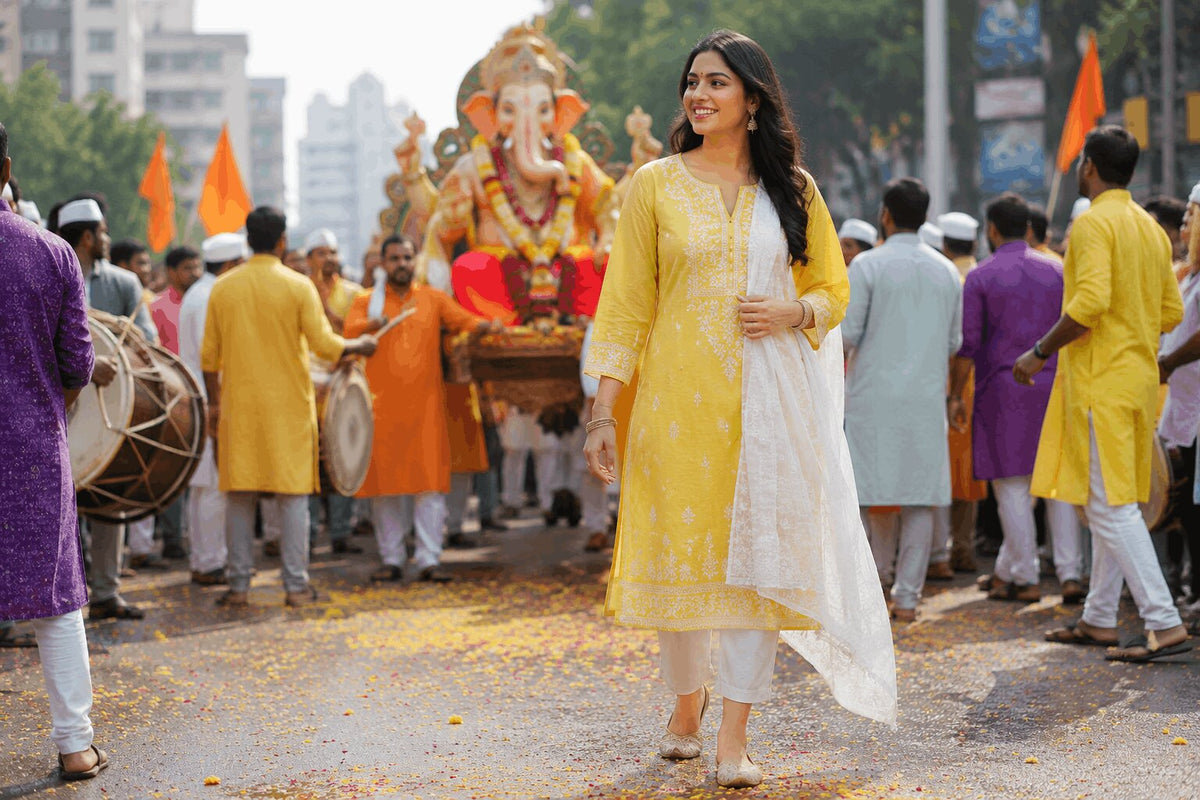
Festivals are where colour and styling can become more playful.
You can choose a brighter kurta, add a dupatta, or bring in festive jewellery. At the same time, there is no requirement to wear heavy embroidery.
A simple cotton Chikankari set can look festive with the right earrings and footwear. The occasion should decide how much detail you actually need.
- How to Choose a Kurta Set for Everyday Wear
For everyday wear, ask yourself a more practical question:
"Will I actually reach for this outfit regularly?"
Look for a fabric you are comfortable wearing, a fit that allows movement and a colour that works with your existing accessories.
A simple set that you wear twice a month is more useful than an elaborate outfit that stays in the wardrobe.
For everyday Chikankari styling, a Chikankari kurta set can give you a complete ethnic look without requiring you to build the outfit piece by piece.
- Check the Product Page Before Buying Online
Photos do not tell you everything. Before placing an order, check:
Size chart: Use the actual measurements.
Fabric details: Do not assume the material from the appearance.
Garment measurements: Check kurta and bottom lengths where provided.
Care instructions: Make sure the required maintenance fits your routine.
Product images: Look at close-ups and different angles.
Return information: Understand the store's return or exchange terms before ordering.
This extra five minutes can prevent the common "looks different from the website" experience.
Current online buying guides also emphasise checking fabric information, garment measurements and product details before ordering.
- Do Not Forget the Kurta Set's Versatility
Before buying, imagine at least three ways you could wear it. For example:
Look 1: Complete kurta set + traditional jewellery.
Look 2: Same kurta + different pants.
Look 3: Same set + different footwear and a modern bag.
The more combinations you can create, the more useful the outfit becomes. This is particularly important when you are building a smaller ethnic wardrobe.
Common Kurta Set Buying Mistakes
Buying Only for the Print
A beautiful print cannot compensate for an uncomfortable fit.
Ignoring Fabric
The fabric affects comfort, fall and care.
Choosing the Wrong Length
Check the actual garment measurements rather than relying on the model's appearance.
Buying a Size Smaller
A kurta should allow you to move comfortably.
Choosing a Festive Set for Everyday Use
A heavily embellished set may look beautiful but may not suit your regular lifestyle.
Forgetting to Check the Bottom
A great kurta with an uncomfortable waistband is still an uncomfortable outfit.
A Simple Checklist Before You Buy
Before clicking "Add to Cart", go through this quick checklist:
Occasion: Where will I wear it?
Fabric: Is it suitable for the weather and duration of wear?
Fit: Have I checked the garment measurements?
Silhouette: Does the cut work with my body and styling preference?
Colour: Can I style it with things I already own?
Bottom: Will the pants be comfortable?
Dupatta: Do I actually need one?
Repeat wear: Can I wear this for more than one occasion?
Care: Can I realistically maintain it?
If the outfit works on all of these points, you are probably looking at a much better purchase than one chosen only because the photograph caught your attention.
Final Thoughts
Knowing how to choose a kurta set becomes much easier when you stop judging the outfit only by its appearance.
Start with where you will wear it.
Then choose a suitable fabric, check the actual measurements, think about the silhouette and pick a colour that works with your wardrobe.
Finally, look at the embroidery, accessories and overall versatility.
The right kurta set is not necessarily the most expensive, the most heavily embroidered or the most fashionable one.
It is the one that fits properly, suits the occasion and gets worn again.
FAQs
How do I choose the right kurta set?
Start with the occasion, then consider fabric, fit, silhouette, colour and embroidery. Also check the actual garment measurements before buying online.
Which fabric is best for a kurta set?
There is no single best fabric. Cotton and mulmul can be practical for warm-weather everyday wear, while fabrics such as Chanderi, georgette and silk can suit dressier occasions.
How should a kurta set fit?
It should allow comfortable movement without pulling tightly across the shoulders, bust or hips. Always compare your measurements with the garment's size chart rather than choosing only from S, M, L or XL.
Which kurta set is best for office wear?
A straight-cut kurta set in a comfortable fabric with subtle colours and limited embellishment is usually easier to wear in an office setting.
Which kurta set is best for a wedding?
For weddings, you can choose richer colours, more detailed embroidery or dressier fabrics. The exact choice should depend on whether it is a daytime or evening function and how formal the event is.
Should I buy a two-piece or three-piece kurta set?
Choose a two-piece set when you want simplicity and easy everyday styling. A three-piece set with a dupatta can be useful when you want a more traditional or festive look.